
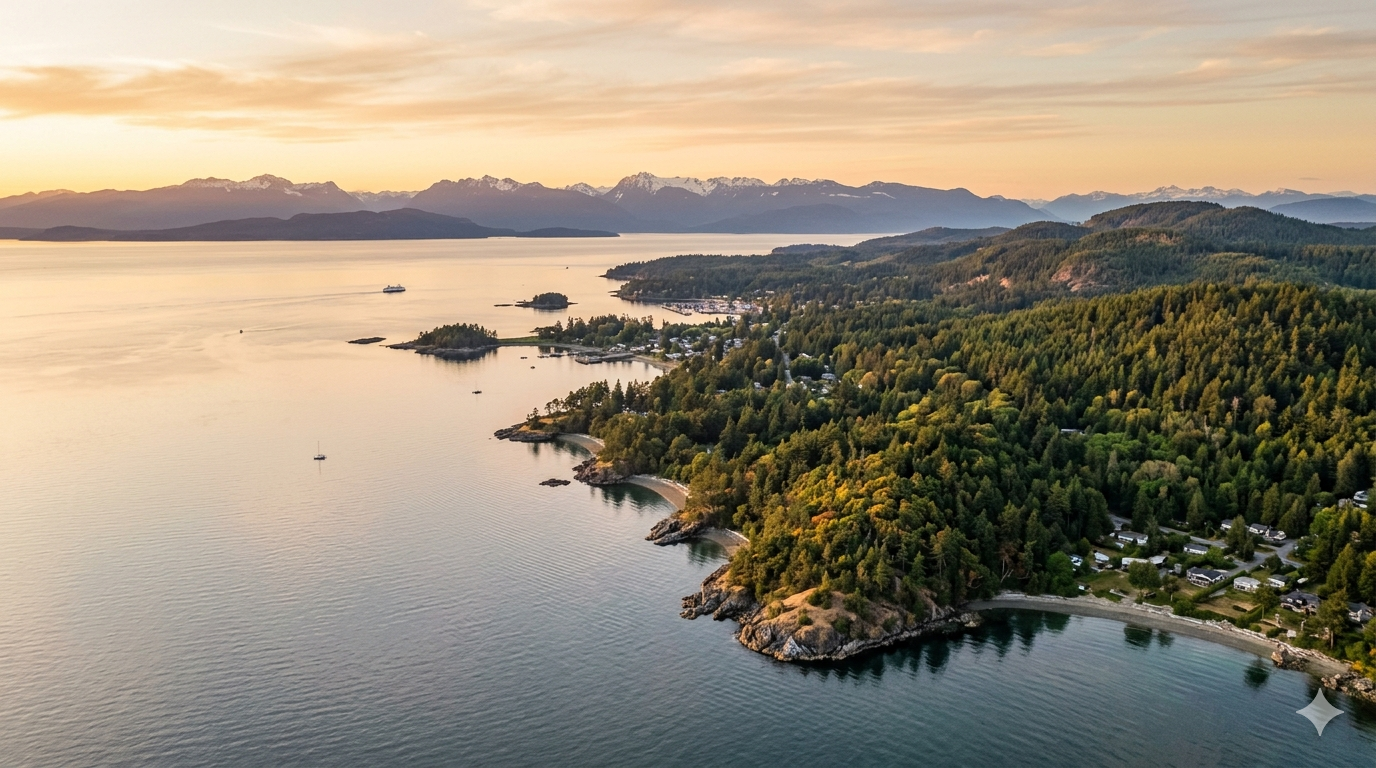
Returning to Canada begins with a significant question: where do you want to build the next stage of your life?
For some Canadians living in the United States, the answer is the community they left years ago. For others, returning home creates an opportunity to choose somewhere new. Vancouver Island deserves serious consideration, particularly if you value a milder climate, access to nature and communities that offer a more relaxed pace without giving up the services and connections needed for everyday life.
The Island is not one single lifestyle, however. Victoria, Nanaimo, the Comox Valley and the smaller communities along the east coast all feel different. Even within Mid-Vancouver Island, the practical differences between Nanoose Bay, Parksville/French Creek, Qualicum Beach, Lantzville, Errington/Coombs and Bowser/Deep Bay can be substantial.
The goal is not simply to choose the most beautiful location. It is to find the community and property that will continue to support your life after the novelty of the move has passed.
That climate makes it easier to enjoy walking, golfing, gardening, boating and other outdoor activities throughout much of the year. It also shapes the homes themselves. Coastal exposure, winter rain, drainage, trees, moss and storm conditions can all affect maintenance and insurance. A property that looks effortless in July may require a different level of care through the winter.
Climate should therefore be considered as both a lifestyle benefit and a property-planning issue.
Parksville offers extensive beaches, shopping, services and a mix of detached homes, condominiums, townhomes and retirement-oriented communities. Qualicum Beach has a walkable village centre, an established year-round community and strong access to recreation and daily amenities.
Nanoose Bay provides a quieter coastal setting, larger properties and communities such as Fairwinds, although many daily errands require more driving. Lantzville combines a small-community atmosphere with convenient access to North Nanaimo. Bowser and Deep Bay appeal to people seeking a quieter pace and natural surroundings, while Errington, Coombs and Hilliers offer more rural property options.
No community is universally better than another. The right choice depends on how you expect to spend an ordinary Tuesday, not simply how a place feels during a summer visit.
Nanaimo provides three practical ferry connections. BC Ferries operates between Departure Bay and Horseshoe Bay and between Duke Point and Tsawwassen. Hullo offers passenger-only service between Nanaimo and downtown Vancouver. Together, these routes provide different options for vehicle travel, airport access, business trips and visits to the Lower Mainland.
Air travel adds another level of flexibility. Floatplane service connects Nanaimo with downtown Vancouver and Richmond near YVR, while Helijet operates scheduled helicopter service between Nanaimo Harbour and Vancouver. Nanaimo Airport provides scheduled commercial flights and connections to other destinations. Farther north, Qualicum Beach Airport offers scheduled service to YVR South, giving Oceanside residents another convenient regional option.
The practical question is how often you expect to travel and which connection best supports your routine. Someone who flies frequently, visits family on the mainland or relies on specialized services may prioritize location differently from someone seeking greater privacy and a quieter pace.
The same applies to healthcare, groceries and everyday services. A peaceful rural or waterfront property may provide the setting you want while adding driving time for appointments and errands. Those trade-offs should be understood before committing to a community.
That makes long-term suitability important. Consider whether the home and community provide:
A local real estate conversation at this stage should not pressure you to buy. It should help you distinguish between communities, understand the property types available and identify questions that need answers before your plans become fixed.
If Vancouver Island is one of the places you are considering, begin by thinking about the routine you want in Canada. From there, you can narrow the communities and properties capable of supporting it.
Explore Returning to Canada
For some Canadians living in the United States, the answer is the community they left years ago. For others, returning home creates an opportunity to choose somewhere new. Vancouver Island deserves serious consideration, particularly if you value a milder climate, access to nature and communities that offer a more relaxed pace without giving up the services and connections needed for everyday life.
The Island is not one single lifestyle, however. Victoria, Nanaimo, the Comox Valley and the smaller communities along the east coast all feel different. Even within Mid-Vancouver Island, the practical differences between Nanoose Bay, Parksville/French Creek, Qualicum Beach, Lantzville, Errington/Coombs and Bowser/Deep Bay can be substantial.
The goal is not simply to choose the most beautiful location. It is to find the community and property that will continue to support your life after the novelty of the move has passed.
A Coastal Climate That Supports Year-Round Living
Vancouver Island is known for having one of Canada's mildest climates. Winters along the east coast are generally gentler than in many parts of the country, while summers are typically warm and comfortable.That climate makes it easier to enjoy walking, golfing, gardening, boating and other outdoor activities throughout much of the year. It also shapes the homes themselves. Coastal exposure, winter rain, drainage, trees, moss and storm conditions can all affect maintenance and insurance. A property that looks effortless in July may require a different level of care through the winter.
Climate should therefore be considered as both a lifestyle benefit and a property-planning issue.
Community Options for Different Ways of Living
One of Mid-Vancouver Island's greatest strengths is the variety of communities within a relatively compact area.Parksville offers extensive beaches, shopping, services and a mix of detached homes, condominiums, townhomes and retirement-oriented communities. Qualicum Beach has a walkable village centre, an established year-round community and strong access to recreation and daily amenities.
Nanoose Bay provides a quieter coastal setting, larger properties and communities such as Fairwinds, although many daily errands require more driving. Lantzville combines a small-community atmosphere with convenient access to North Nanaimo. Bowser and Deep Bay appeal to people seeking a quieter pace and natural surroundings, while Errington, Coombs and Hilliers offer more rural property options.
No community is universally better than another. The right choice depends on how you expect to spend an ordinary Tuesday, not simply how a place feels during a summer visit.
Access Still Matters on an Island
Island living does not mean being disconnected. Mid-Vancouver Island offers several ways to reach the Lower Mainland, although the convenience of each option depends on where you live, how frequently you travel and whether you need to take a vehicle.Nanaimo provides three practical ferry connections. BC Ferries operates between Departure Bay and Horseshoe Bay and between Duke Point and Tsawwassen. Hullo offers passenger-only service between Nanaimo and downtown Vancouver. Together, these routes provide different options for vehicle travel, airport access, business trips and visits to the Lower Mainland.
Air travel adds another level of flexibility. Floatplane service connects Nanaimo with downtown Vancouver and Richmond near YVR, while Helijet operates scheduled helicopter service between Nanaimo Harbour and Vancouver. Nanaimo Airport provides scheduled commercial flights and connections to other destinations. Farther north, Qualicum Beach Airport offers scheduled service to YVR South, giving Oceanside residents another convenient regional option.
The practical question is how often you expect to travel and which connection best supports your routine. Someone who flies frequently, visits family on the mainland or relies on specialized services may prioritize location differently from someone seeking greater privacy and a quieter pace.
The same applies to healthcare, groceries and everyday services. A peaceful rural or waterfront property may provide the setting you want while adding driving time for appointments and errands. Those trade-offs should be understood before committing to a community.
Choose for the Life You Are Building
Returning Canadians are often planning more than a change of address. They may be simplifying two-country living, preparing for retirement, moving closer to family or choosing a home that will work well for the next decade.That makes long-term suitability important. Consider whether the home and community provide:
- A layout that can adapt as your needs change
- Manageable property and exterior maintenance
- Reasonable access to healthcare and daily services
- Space for hobbies, visitors, pets and storage
- A comfortable balance between privacy and community connection
- Reliable transportation options for the travel you expect to do
- An ownership structure that fits your preferred level of responsibility
Start Exploring Before You Are Ready to Buy
You do not need a firm moving date to begin comparing Vancouver Island communities. Early research can help you understand the market, identify realistic locations and decide what deserves a closer look during a future visit.A local real estate conversation at this stage should not pressure you to buy. It should help you distinguish between communities, understand the property types available and identify questions that need answers before your plans become fixed.
If Vancouver Island is one of the places you are considering, begin by thinking about the routine you want in Canada. From there, you can narrow the communities and properties capable of supporting it.
Considering Vancouver Island as Your Canadian Home?
Explore practical guidance for returning Canadians, snowbirds and others planning a move to Mid-Vancouver Island.Explore Returning to Canada